Does Paint and Primer in One Work? What to Know Before Buying
Paint and primer in one, or self-priming paint, is a great option for many DIYers to save time when painting the interior or exterior of a home. This type of paint works well for many projects, however, it isn't right for every job, depending on the type of surface you need to paint.
Read on to learn how to determine when self-priming paint should and shouldn't be used.
What Is Self-Priming Paint?
Paint and primer in one is a paint with primer mixed into it. It allows you to entirely eliminate the priming step from your painting process. This type of paint product is sold under a variety of names including paint-primer.
What Is Paint and Primer in One?
When you paint a house and it needs to be primed in advance, usually it is a two-part step. First, you use a thin-bodied white or tinted primer. Second, you use thicker-bodied latex paint—which delivers the true paint color and outer protection that you need.
Paint and primer in one is a thicker paint that builds higher to give you a sturdier coat of paint. Since it is tinted just like conventional paint, there is no need to cover up the initial layer of white primer.
How Self-Priming Paint Works
Self-priming paint is thicker than normal, non-priming paint. The paint industry term for this is "build." Paint and primer in one has a higher build, meaning that in its cured (dry) state it rises, or builds up, to a thicker layer than regular paint or primer.
Most self-priming paint, despite the heavier consistency, should still be capable of being run through a paint sprayer without thinning.
When speaking of consistencies, note that primer itself (not paint and primer in one) is a relatively thin-bodied material. Primer is thin so that it will more readily soak into porous surfaces.
When to Use Primer Separately
Priming a surface before painting is often a tough sell for many homeowners because its benefits are not immediately evident. Primer is not color, nor is it even a protective coat. Painting the color coat is near-instant gratification, while priming is drudge work that eventually gets covered up.
Yet priming before painting is often necessary when dealing with problem surfaces that will not take paint well, such as:
- All bare surfaces that are very porous
- Raw, unfinished wood
- Stained wood and surfaces
- Repainting cabinetry
- Uncoated metal
- Unfinished drywall
- Masonry
You also need to prime when you are worried about wood bleeding, gloss, grease, or other areas that make paint adhesion difficult.
While you always do want to clean the surface as much as possible and roughen up glossy areas, this still does not automatically make the surface perfect and ready for a topcoat. Primer helps bring the surface closer to perfection.
When to Use Self-Priming Paint
While not an exclusive list, you may want to use paint and primer in one when:
- Re-painting: Re-painting a wall in the same color as self-priming paint works well because you do not have to worry about color bleed-through.
- Drywall: When you are painting new, unfinished drywall and you do not want to prime separately, consider using self-priming paint. New drywall always has to be primed in some form.
- Interiors: Interior surfaces work best with paint and primer in one since interiors do not experience the stresses of exteriors—UV rays, rain, and snow.
If your house has any paint problems—peeling, flaking, bubbling—consider using a conventional primer instead.
When Primer Is Not Needed
With some projects, you may not need paint and primer in one or any type of primer at all. Ideally, all surfaces should be patched, primed once or twice, then painted twice again. But realistically, it may be possible to cut out the priming step.
Clean, dry, and fairly low-porous surfaces in good condition may not need any priming. This describes the walls in a typical interior living room, bedroom, dining room, or hallway.
When you are re-painting a color with the same color, you can usually use just one or two coats of paint—primer is not required.
Will Paint and Primer in One Save Money?
Self-priming paint is restricted to the more expensive premium paint lines. This is important to note because this immediately drives up costs. You cannot go cheap with self-priming paint, even on a per-gallon basis.
Brands of Self-Priming Paint
A few paint manufacturers still do not expressly put "self-priming" on the label. The self-priming quality is usually mentioned secondarily. To confirm, you can usually find technical specifications for paints on manufacturers' sites.
Popular paint brands like Sherwin-Williams, BEHR, Valspar, and Benjamin Moore all offer paint and primers in one.
RECOMMENDED NEWS
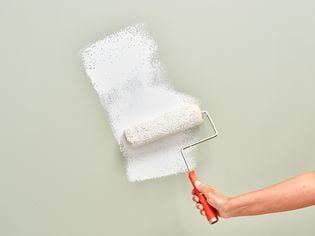
How Many Coats of Primer Do You Need?
Should you always prime before painting? If so, how many coats of primer do you need? There's no on...
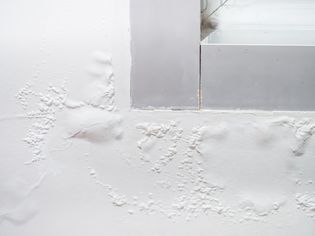
10 Reasons Why Paint Is Bubbling on Your Walls and How to Fix It Like a Pro Fast
Paint bubbling on the wall can drag down your home’s look, making it look dingy and dirty. While bu...

What Is Retro Design? Explore Its History and Key Elements
Retro style is making a major comeback and is especially popular among millennials. We spoke with d...
5 Designer-Approved Ways to Brighten Your Basement on a Budget That Actually Work
Add mirrors and try color drenching or layering for a brighter, cohesive look.Try a bold mural or p...
4 Easy Kitchen Upgrades That Instantly Make Your Home Look Good, According to Designers
Key Points Swap out cabinet hardware and light fixtures to instantly modernize your kitchen with min...

How to Assemble Your Renovation Dream Team
When my husband and I set out to buy a small cottage in the English countryside, we didn’t exactly ...
Comments on "Does Paint and Primer in One Work? What to Know Before Buying" :